You have probably already found the language. Dysregulated. Stuck in fight-or-flight. Sympathetic dominance. Somewhere between a podcast episode and a late-night search, you found a set of words that finally described the thing you have been living inside — the wired exhaustion, the shallow breath you only notice when someone points it out, the sense that you are running an engine that never fully shuts off.
Naming it is a real step. But naming it does not change it. And this is where most people get stuck: they now understand the mechanism, they have downloaded the breathing app, they have tried the cold plunge, and their body is still doing exactly what it was doing before.
This piece is about why that happens, and what actually moves the needle.
What “dysregulated” actually means
Your autonomic nervous system has two broad modes. The sympathetic branch mobilizes you heart rate up, breath shallow and high in the chest, blood to the limbs, attention narrowed to threat. The parasympathetic branch does the opposite: it governs digestion, repair, deep sleep, immune function, and the kind of thinking that produces insight rather than reaction.
Neither is good or bad. The problem is not that you have a stress response. The problem is that a system designed for short bursts has been running continuously for years.
When that happens, a few things change,
Your baseline moves.
What used to be an elevated state becomes your normal. You stop noticing it, the way you stop hearing a refrigerator hum. People around you may describe you as calm while your physiology is nowhere near it.
Your recovery window shrinks.
A healthy system spikes and returns. A dysregulated one spikes and stays. The return trip gets slower until it more or less stops happening.
Your interoception dulls.
Interoception is your ability to accurately read your own internal state hunger, fatigue, tension, emotion. Under chronic load, that signal degrades. This is why high-functioning people are often the last to know they are in trouble. The instrument that would tell you has been turned down.
Your body organizes around the pattern.
Fascia adapts to habitual position. Breath mechanics change. The diaphragm stops moving through full range. Postural patterns set. The nervous system state becomes structural, which means it is no longer just a mood it is architecture.
That last point matters more than most approaches acknowledge, and it is where I would push back on a lot of what gets sold as nervous system work.
Why the usual approaches stall
I want to be careful here, because most of these tools are genuinely useful. The problem is rarely the tool. The problem is the assumption underneath it.
Breathwork apps. Slow exhales do shift autonomic state — that is real physiology, not marketing. But five minutes of box breathing against sixteen hours of sympathetic load is a rounding error. The practice is sound; the dose and the context are not.
Cold exposure. Cold is a stressor. Used well, in a system with capacity, it builds resilience. Used on a system already running at the edge, it is one more thing to survive. I have worked with people whose cold plunge habit was quietly making things worse, because they were treating a depleted system like an under-trained one.
Meditation. For someone in genuine hypervigilance, sitting still and turning attention inward can be activating rather than calming. If your history includes trauma, the instruction to “just observe the sensation” can drop you into the exact place your system has been working to avoid. This is well documented and rarely mentioned.
More discipline. The instinct of high-achieving people is to attack dysregulation the way they attack everything else — harder, more consistently, with better tracking. But you cannot out-effort a system that is already over-effort. The strategy that built your career is the strategy that broke your physiology, and applying more of it is not a neutral act.
The common thread: all of these are additions. They add an input to a system that is already overloaded with inputs.
What actually changes the pattern
The reframe I work from is simple, and it took me a long time to arrive at:
The body already knows how to regulate. It does not need to be taught. It needs the
conditions restored that allow it to do what it does natively.
That is a different job than optimization. It is subtraction before addition. In practice, four things do the heavy lifting.
1. Removing load, genuinely
Not reducing. Removing.
The single most underrated variable in nervous system recovery is the sheer absence of demand. No notifications. No decisions. No social performance. No ambient noise. No visual complexity. Nothing requiring a response.
Most people have not experienced this in years, and it is nearly impossible to manufacture at home, because home contains every cue your system has learned to brace against. The environment is not a backdrop to the work. It is a substantial portion of the work.
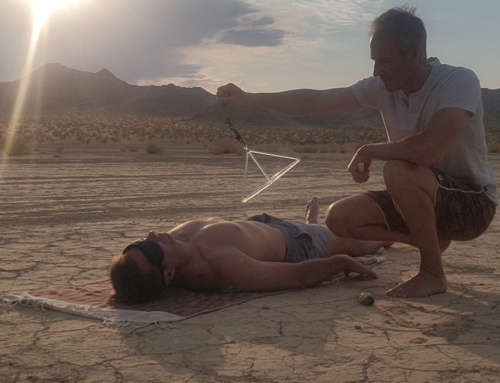
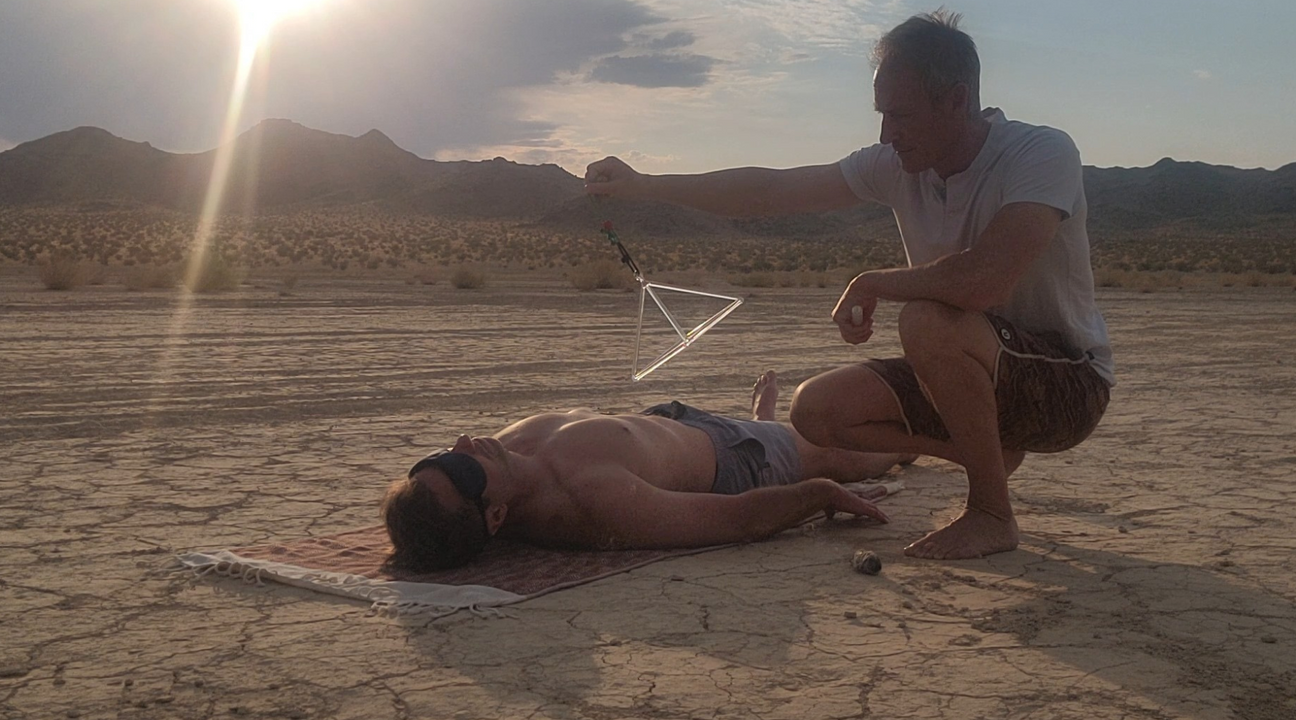
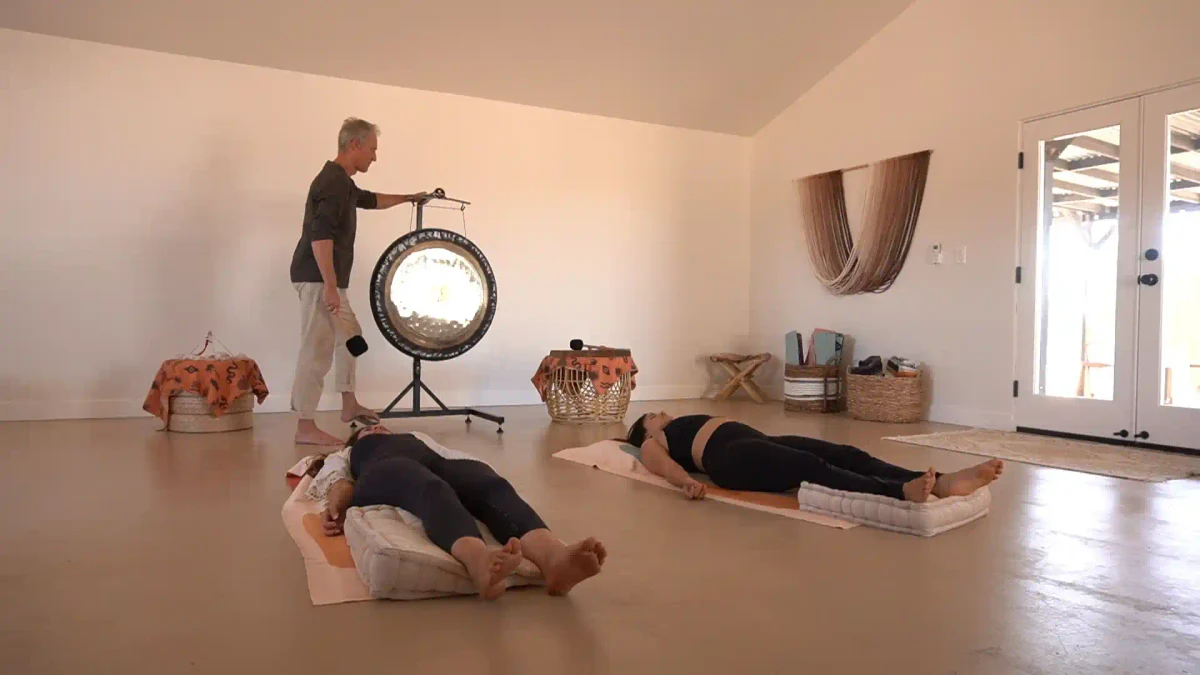
This is part of why the high desert does what it does. It is quiet in a way that is genuinely rare — not sound-managed, but naturally sparse. The visual field is large and slow. There is nothing asking anything of you. For a system that has been braced for years, that alone begins to do something within about forty-eight hours.
2. Restoring structural communication
Here is where I differ from most people working in this space.
A nervous system does not float in a vacuum. It lives in tissue. When someone has been in sympathetic load for a decade, the fascia has adapted, the ribcage has changed how it moves, the diaphragm has lost range, and the joints have organized around a defensive pattern.
You can breathe correctly for an hour a day and still spend the other twenty-three in a structure that mechanically prevents full exhalation. The structure will win.
Hands-on work — fascial, joint-level, focused on restoring communication between segments rather than forcing change — addresses the physical substrate that behavioral practice cannot reach. This is not massage for relaxation. It is restoring the body’s ability to organize itself, so that the breath practice you learn actually has somewhere to land.
3. Working underneath conscious control
The autonomic nervous system is, by definition, not under voluntary command. You cannot decide to be regulated any more than you can decide to digest faster.
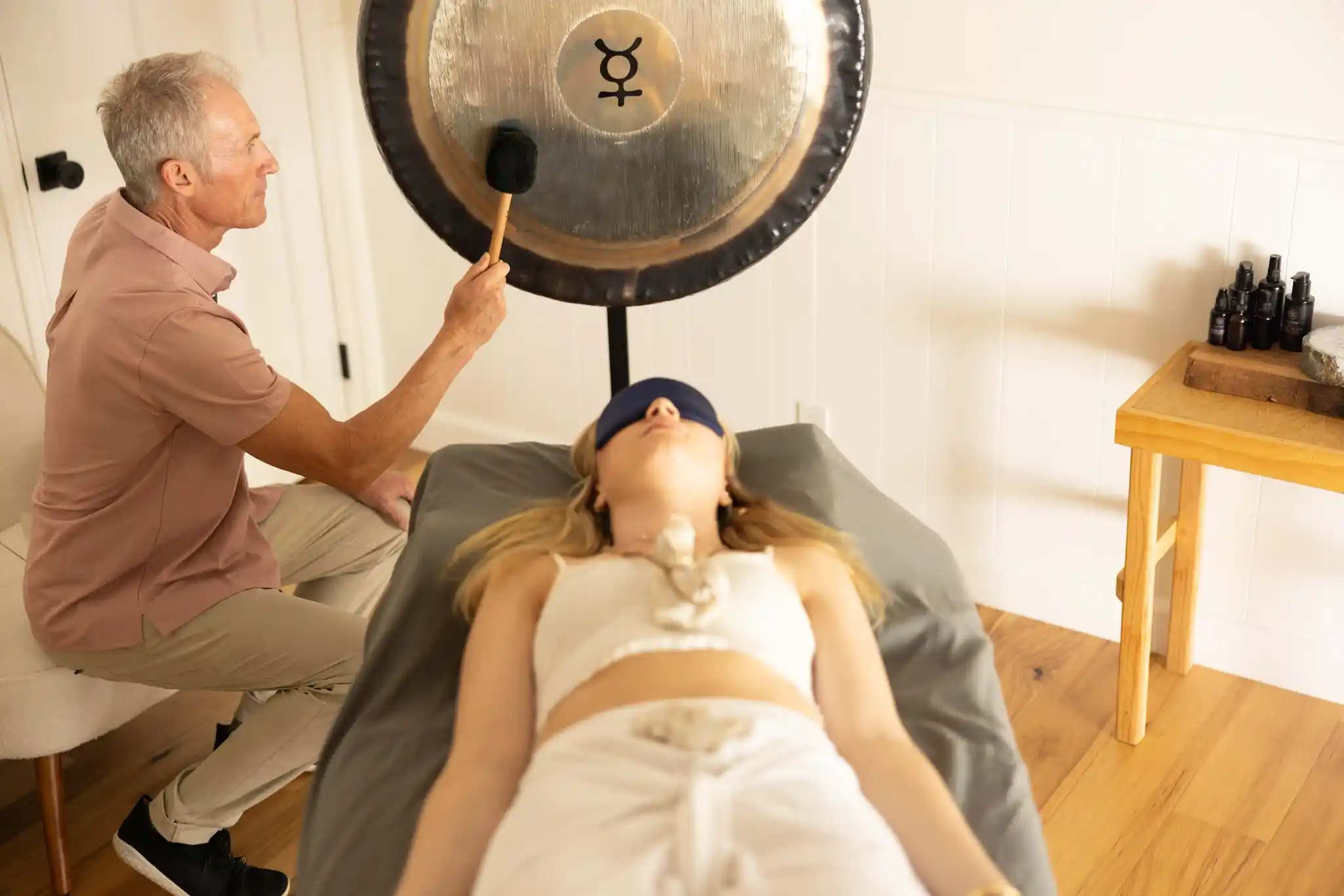
What does reach it: rhythm, vibration, touch, breath mechanics, and sustained safety. These are all bottom-up inputs. They bypass the part of you that has opinions about whether this is working.
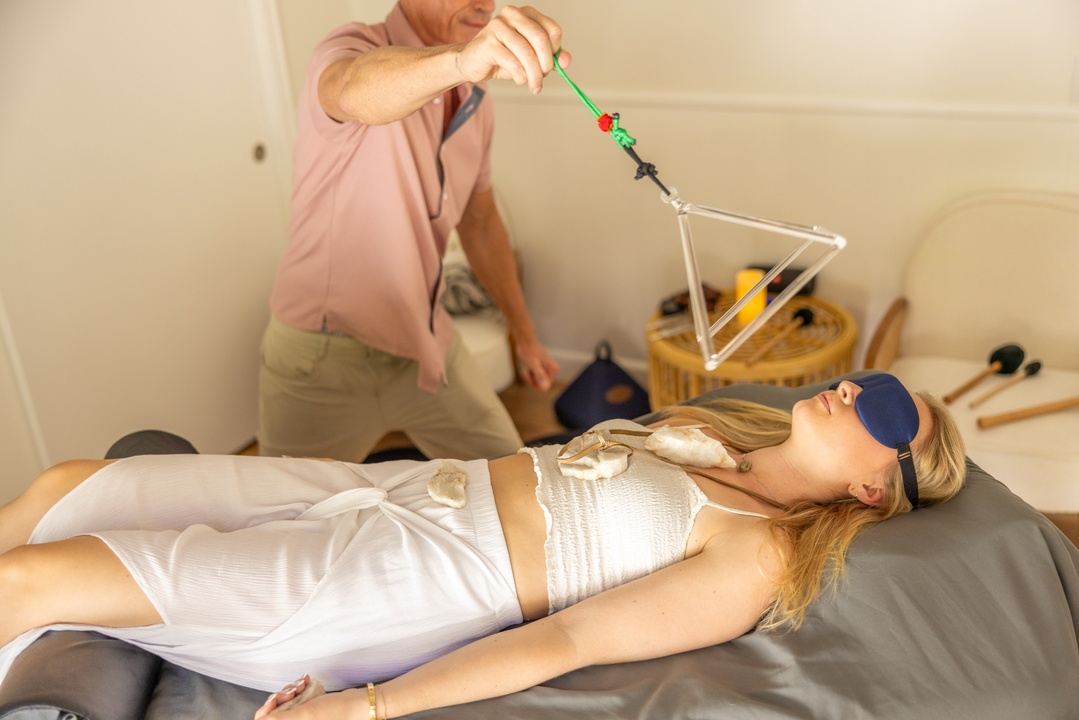
Sound work is one of these. A large gong produces a broad, non-rhythmic acoustic field that gives the auditory system nothing to track and nothing to predict. For someone whose attention is chronically scanning, this is unusual — there is no pattern to solve. Many people report the first genuine drop in vigilance they have had in years, not because they relaxed on purpose, but because the scanning function ran out of material.
I am not going to make clinical claims about frequencies. What I will say is that after thirty years of watching bodies respond, the effect is consistent enough that I build sessions around it.
4. Enough time in the new state to encode it
This is the one most retreats get wrong, and it is worth being blunt about.
A single afternoon of relaxation is a state change. It reverts. What you are after is a shift in baseline, and baseline is a durable thing — it moves slowly, and it moves through repetition in a supported environment.
Realistically, most people need the first day and a half simply to stop bracing. Actual regulation work happens after that. Anyone promising a nervous system overhaul in a weekend is selling you the first day and a half.
This is also why I keep my work to one to three people. There is no version of this that scales without diluting it.
An honest word on what this is not
I want to be direct about some limits, because this field has a real problem with overclaiming.
This is not treatment for a psychiatric condition. Nervous system dysregulation and clinical depression or anxiety disorders overlap significantly, and they are not the same thing. If your symptoms extend across every domain of your life, persist regardless of context, include hopelessness, or involve thoughts of harming yourself, the right first call is a physician or a licensed mental health professional — not a retreat. Somatic work can sit alongside clinical care. It does not replace it.
This is not a substitute for addressing the source. If you return to eighty-hour weeks and the same conditions, your physiology will return with them. The work restores capacity. What you do with that capacity is a separate decision, and it is yours.
Results are not uniform. Some people experience a marked shift in a few days. Others need repeated exposure. History, duration of load, sleep quality, medication, and a dozen other factors all matter. Anyone quoting you a success rate is guessing.
It is not comfortable throughout. When a system that has been braced for years begins to release, what surfaces is not always pleasant. Emotion held in tissue tends to come up on the way out. This is normal and worth knowing in advance.
How to tell whether you are ready
Some honest questions:
- Do you sleep through the night, and do you wake restored?
- Can you sit without a device for twenty minutes without discomfort?
- Do you know what your body feels like right now, without checking?
- When did you last feel genuinely, physically calm — not tired, not numb, calm?
- Has anyone close to you said something about it?
If the last one is a yes, take it seriously. Interoception degrades under chronic load, which means the people around you often have better data than you do.
What this looks like in practice
My work happens on five acres in the high desert near Joshua Tree, with one to three people at a time. There is no program schedule, no group circle, and no set curriculum, because a body in the state I have described does not need more structure it needs the opposite.
What it does involve: hands-on structural work, breath and movement restoration, sound, and long stretches of doing nothing in a place where nothing is asked of you. The sequence is built around what your system is actually doing, which I cannot know until you arrive.
If any of this describes where you are, the private immersions in Joshua Tree page explains the formats. If you are still weighing whether a private format is right for you, private versus group retreats covers that decision in more detail.
Ramsay Mead is a structural healer, movement educator, and longevity guide with thirty years of practice in nervous system regulation, embodied movement, and integrative natural health. He works privately with founders, executives, and athletes at Camp Vortex Retreats in Joshua Tree, California.
This article is educational and is not medical advice. If you are experiencing persistent symptoms of depression, anxiety, or thoughts of self-harm, please contact a licensed medical or mental health professional.