
I run private retreats. One to three people at a time. So you should read what follows knowing where I sit and knowing that I am going to spend a meaningful portion of this article explaining when a group retreat is the better choice, because for a lot of people it genuinely is.
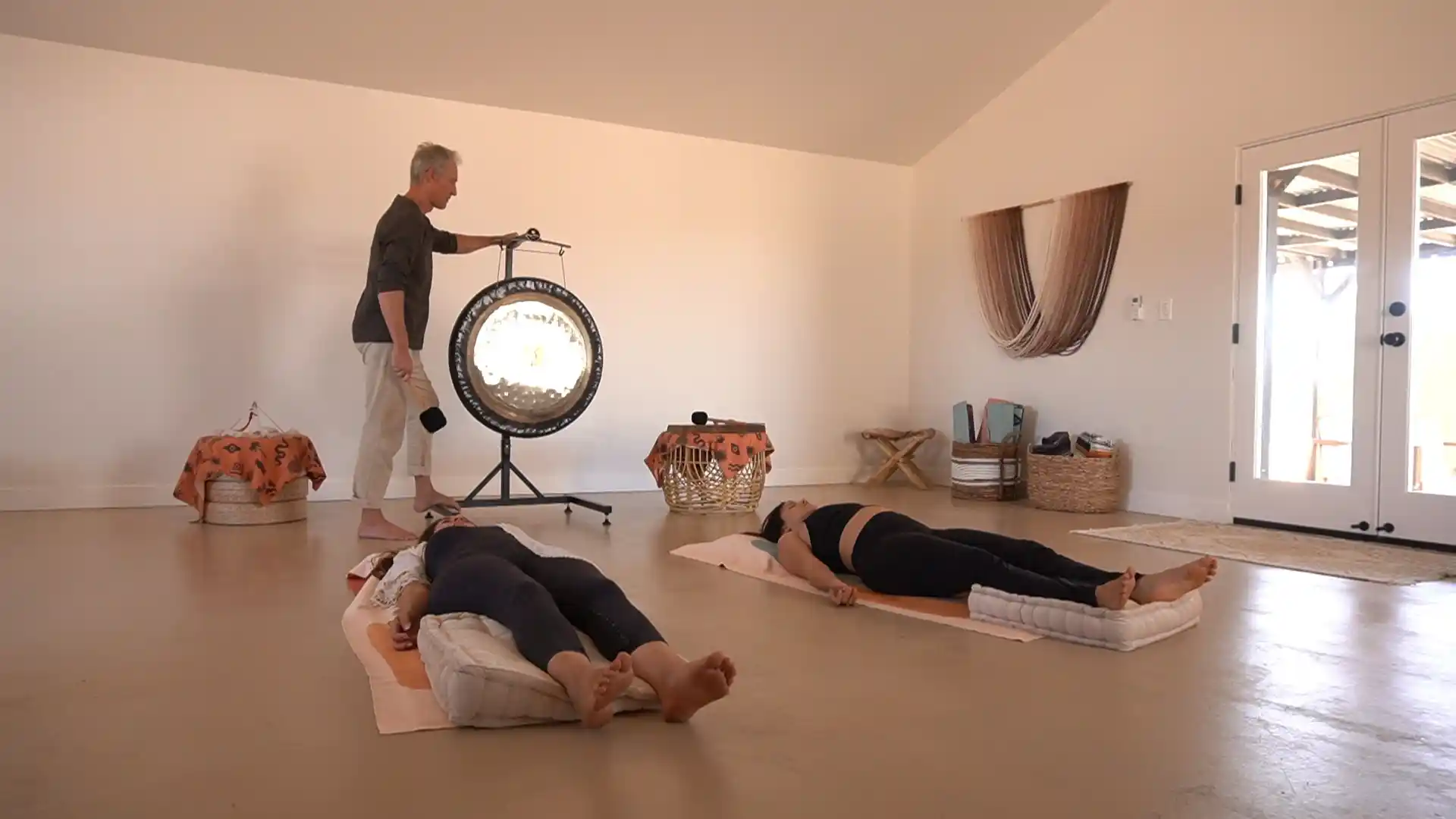
The two formats are not competing versions of the same thing. They do different work. Choosing badly is expensive in both directions: a group program can leave a depleted person more depleted, and a private container can leave someone who needed community feeling isolated and overcharged for it.
The honest comparison
| Group Retreat | Private Retreat | |
| Typical size | 8–30 participants | 1–3 people |
| Schedule | Fixed curriculum, set dates | Built around you, flexible dates |
| Cost | Lower — fixed costs spread across participants | Higher — costs concentrated |
| Pacing | Set by the group | Set by your system |
| Attention | Divided among participants | Undivided |
| Community | Substantial — often the main value | Minimal by design |
| Privacy | Limited; shared spaces and sharing circles | Complete |
| Social demand | Constant, low-grade | None |
| Best for | Connection, structure, shared momentum, first-timers | Depletion, specificity, privacy, going deeper faster |
Cost is usually the first question, so let me address it plainly. Group retreats spread the cost of the venue, the facilitators, the food, and the staff across everyone attending. A private retreat concentrates all of that on one person or a small pair. That difference is not a markup — it is arithmetic. What you are buying is exclusive use of a property, a practitioner’s undivided attention, and a schedule that bends to you.
Whether that is worth it depends entirely on what you need, which is the actual subject of this article.
When a group retreat is the better choice
I want to be genuinely useful here rather than steering you toward what I sell.
When isolation is part of the problem. If you have been lonely, recently divorced, newly relocated, or otherwise disconnected, the community aspect of a group retreat is not a side benefit — it is the medicine. Sitting in a circle and discovering that other people carry the same thing does something that no amount of one-on-one attention replicates. If that describes you, book the group.
When you are new to this kind of work. Group retreats give you structure, a set curriculum, and the reassurance of watching other people do the thing first. If you have never done breathwork or somatic practice and you are unsure what you are walking into, the scaffolding helps.
When shared energy motivates you. Some people genuinely open up in the presence of others. Collective momentum carries them past resistance they would not push through alone. If you know this about yourself, honor it.
When budget is the deciding factor. A well-run group retreat is far better than no retreat. If the private option means going into debt or not going at all, go to the group one. Anyone telling you otherwise is selling.
When you want to travel and meet people. Some retreats are, quite reasonably, wellness-flavored travel with good company. That is a legitimate thing to want, and a private immersion is a poor substitute for it.
When a private retreat is the better choice
When social presence itself is a cost. This is the one most people underestimate. If your nervous system is depleted, being around other humans is not neutral — it is a demand. Meals with strangers, sharing circles, the low-grade calibration of being perceived. For someone in genuine depletion, a group program can mean paying to add a new form of load. I have worked with people who came to me after a group retreat left them more tired than when they arrived.
When your situation is specific. Group programs run a curriculum designed for a median participant. If you have a particular injury, a specific structural pattern, a history that shapes what is safe for you, or a goal that does not fit the template, you will spend the week adapting the program to yourself. A private container starts from your situation instead.
When privacy is non-negotiable. For public-facing people, executives, and anyone whose circumstances they would rather not discuss with a room, this is often the deciding factor. There is no one from your industry at the next table and no expectation to disclose anything.
When you need to go deeper faster. Group pacing is set by the group. Structural and somatic work in a private setting can move as quickly as your system allows, and adjust in real time based on what is actually happening rather than what the schedule says should be happening.
When you cannot make the dates work. Group retreats run on fixed calendars. If your life does not accommodate that, the choice is somewhat made for you.
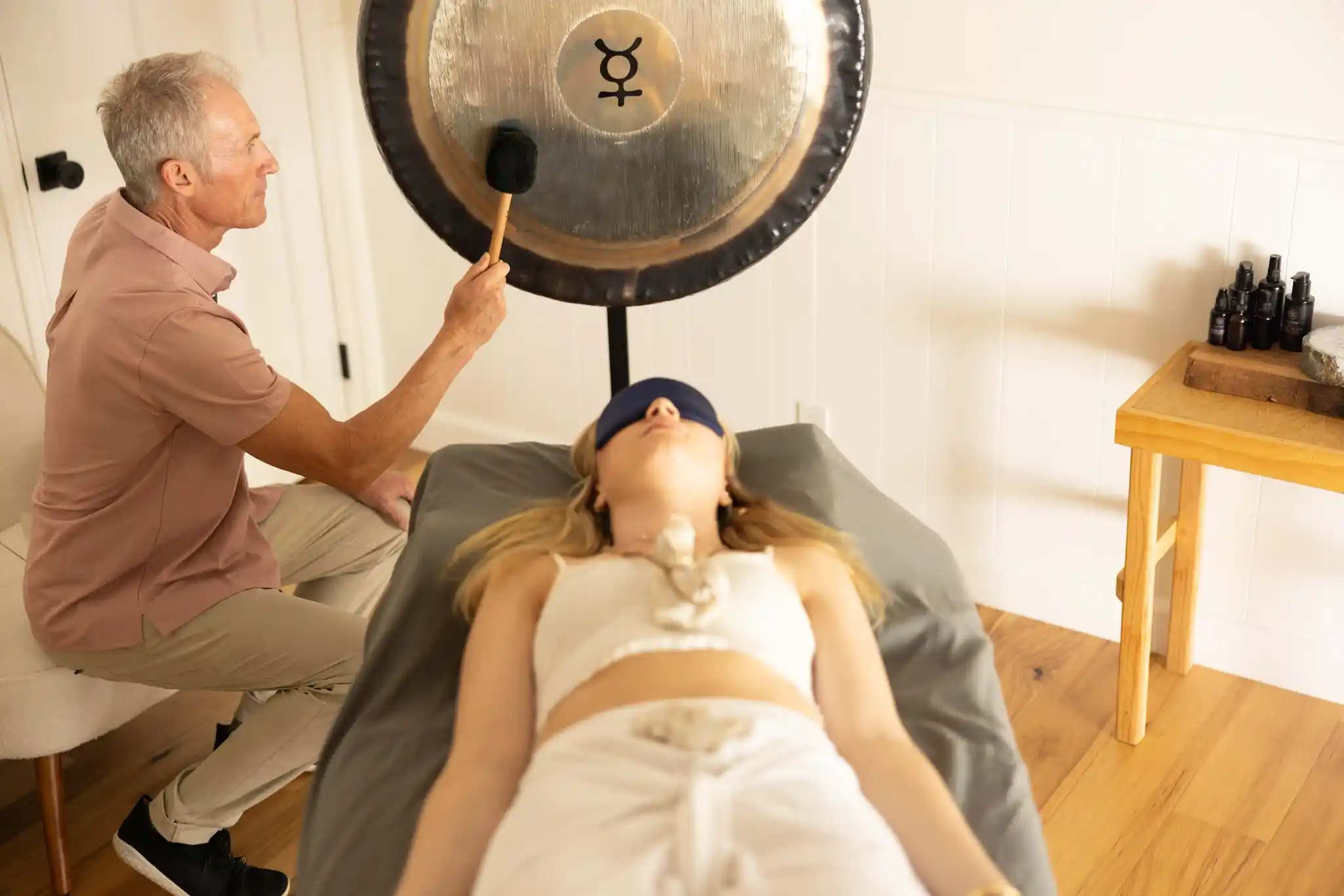
What actually happens in a private retreat
The most common question I get is some version of what do I actually do all day? — usually asked with some anxiety about being alone with a practitioner for several days.
Fair question. Here is the honest shape of it.
The first day is deceleration. You will probably feel restless. You may reach for a phone that is not there. This is not the retreat failing to work; it is the withdrawal from a stimulation pattern, and it is expected. Most people spend the first thirty-six hours simply stopping.
There is no fixed schedule. This unsettles people initially, particularly those used to optimizing their time. But a system in depletion does not need more structure imposed on it. Sessions happen when they should. There are long stretches where nothing is planned, and that emptiness is doing work.
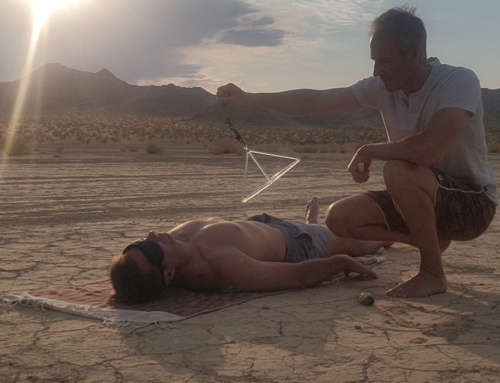
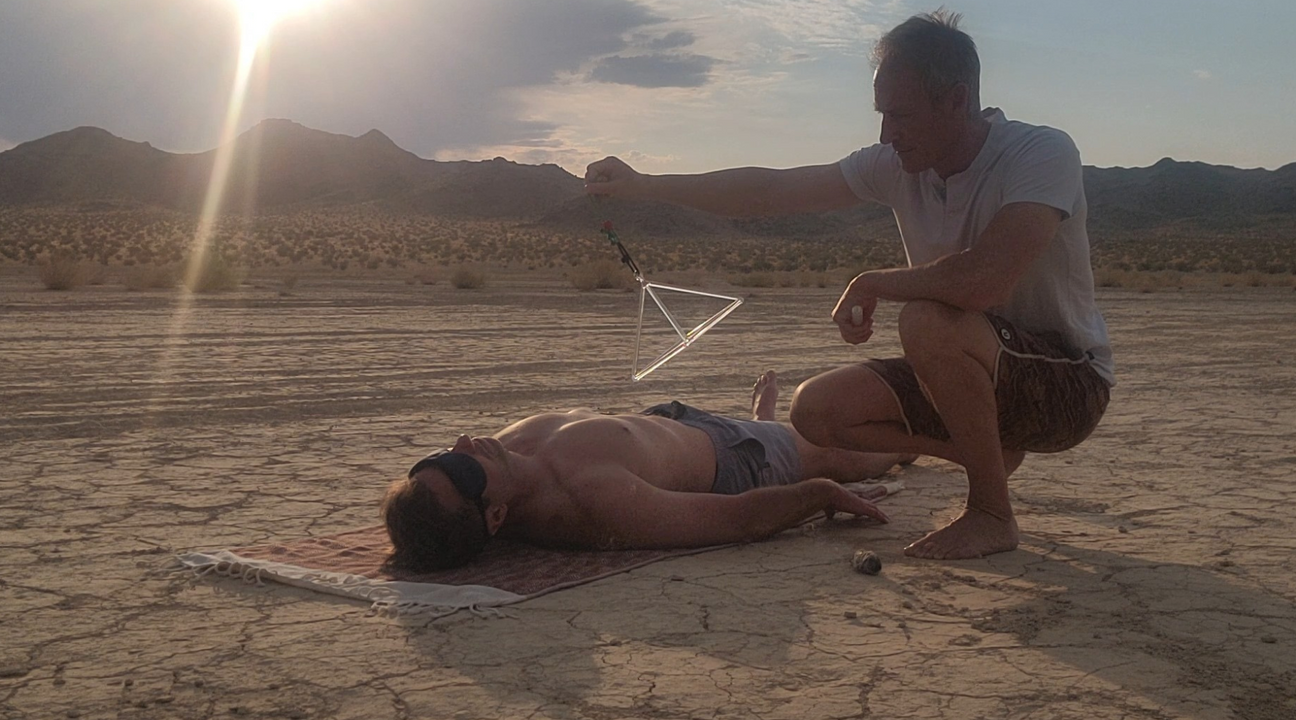
Sessions are responsive. I do not know what your body needs until I see it. The sequence is built from what is actually present — structural work, breath and movement restoration, sound, or on some days considerably less than any of that.
You are not performing. No sharing circle, no going around the room, no explaining your story to strangers. If you want to talk, we talk. If you want three days of near-silence, that is available and often more useful.
Meals are simple and you are not managing anything. No decisions. That absence of small decisions matters more than it sounds.
It is not constant intervention. Some of the most valuable hours are the ones where nothing is scheduled and you are sitting outside doing nothing at all. If you are paying for a private retreat and every hour is programmed, you are being sold a schedule, not a recovery.
Questions worth asking before booking either
Whoever you go with, mine or otherwise:
- How many participants, actually? “Small group” means anything from six to twenty-five depending on who is saying it. Get a number.
- What are the practitioner’s actual credentials and years of practice? Ask directly.
- What is the ratio of scheduled programming to open time? A packed schedule is a red flag for depletion recovery.
- What happens if I need to stop or change course mid-retreat?
- Is there any screening? A responsible operator will ask about your history and medications before taking your money. If nobody asks, that tells you something.
- What does integration look like afterward? The days after matter as much as the days during.
- What is genuinely included? Accommodation, food, sessions, transfers — get specifics.
The honest limits of both
Neither format is a cure for anything, and I would be wary of anyone framing it that way.
A retreat is a threshold. It removes load, restores capacity, and gives you a reference point for what a regulated state actually feels like — something most chronically depleted people have genuinely lost track of. Whether it holds depends on what you return to and what you change.
If you go back to identical conditions, your physiology will follow. Both formats have this limitation equally, and any operator promising permanent transformation from a few days is overselling.
Also worth saying plainly: if what you are dealing with includes persistent low mood across every area of your life, hopelessness, or thoughts of self-harm, the first step is a physician or licensed mental health professional — not a retreat of either kind. Somatic work sits alongside clinical care rather than replacing it.
A simple way to decide
One question tends to resolve it:
Does being around other people cost you energy or give you energy right now?
Not in general — right now, in the state you are actually in. The same person can need a group retreat one year and a private one the next.
If the answer is gives me energy, book the group retreat. You will get more from it and pay less for it.
If the answer is costs me energy, a group program will likely add load rather than remove it, and the private format is worth what it costs.
If you want to see what a private format looks like in practice, you can read the immersion formats I offer, have a look at the property, or check the frequently asked questions. If you are working out whether what you are dealing with is nervous system regulation or burnout in high performers, those pieces go deeper.
Ramsay Mead is a structural healer, movement educator, and longevity guide working privately with founders, executives, and athletes at Camp Vortex Retreats in Joshua Tree, California.
This article is educational and is not medical advice.