
The vacation did not fix it.
You took the time. You went somewhere good. You slept, you were off email for six days, you came back and within about seventy-two hours you were exactly where you started. Possibly worse, because now you have evidence that rest does not work on you, and that is a genuinely unsettling piece of information.
This is one of the most common things I hear from founders and executives, and it is almost always misread as a personal failing. It is not. It is a predictable physiological outcome, and once you understand the mechanism it stops being mysterious.
Burnout is not tiredness
The word has been flattened by overuse. People say burnout when they mean they had a hard quarter. That is not what this is about.
What I am describing is a specific state with a specific shape:
Emotional flatness rather than sadness. Not distress — absence. The things that used to generate satisfaction generate nothing. You close a deal you would have celebrated three years ago and feel roughly what you would feel about a completed errand.
Cognitive narrowing. You can still execute. What you have lost is range — the ability to think laterally, hold ambiguity, or generate a genuinely new idea. You are running on retrieval rather than synthesis, and you may be the only one who notices.
Cynicism as a default lens. A reflexive dismissiveness toward things you used to find interesting. Often expressed as sharper judgment, which reads to others as high standards.
Physical symptoms with no clear cause. Disrupted sleep despite exhaustion. Tension that no longer responds to anything. Digestive changes. Frequent minor illness. Persistent low-grade pain.
Preserved function. This is the defining feature and the reason it goes so long unaddressed. You are still performing. Board still happy. Team still functioning. From the outside, nothing is wrong. Which makes it very difficult to justify stopping.
Why the usual fixes fail
Vacation. A week of leisure changes your state. It does not change your baseline. You return to the same conditions with a system that has, if anything, briefly relaxed enough to notice how depleted it is. The crash on re-entry is not the vacation failing — it is contrast.
Sleep. Chronic sympathetic activation degrades sleep architecture, not just duration. You can spend nine hours in bed and get very little deep or REM sleep. More time horizontal does not fix a system that is not dropping into the right stages. This is why “I slept twelve hours and woke up exhausted” is such a common report.
Optimization. The supplements, the wearables, the protocol. I say this as someone who runs a fairly rigorous personal protocol: for a genuinely burned-out system, this often becomes another performance domain. Another set of metrics to hit. Another way to be failing. If your recovery has a scoreboard, examine that carefully.
Coaching. Executive coaching is effective for leaders whose baseline is intact. It works on strategy, behavior, and thinking. But a nervous system in chronic depletion cannot execute on insight — you can leave a session with total clarity about what to change and find yourself physiologically unable to do it. The insight is not the bottleneck. Capacity is.
Working through it. The strategy that got you here. Every high performer’s first instinct is that this is a discipline problem and the answer is more of what already works. This is the single most reliable way to convert a recoverable state into a long one.
What is physiologically happening
A simplified version, because the mechanism matters:
Under sustained demand, your HPA axis — the hormonal system governing stress response — stays activated far past its design window. Cortisol patterns flatten and lose their normal daily curve, which is part of why you feel wired at midnight and flattened at ten in the morning.
Simultaneously your autonomic nervous system loses flexibility. A healthy system moves fluidly between mobilization and recovery. A depleted one gets stuck in mobilization, and the parasympathetic functions that handle repair, digestion, and deep sleep get chronically underfunded.
Then it becomes structural. Fascia adapts to held position. Breath mechanics change — most chronically stressed people breathe high in the chest with restricted diaphragm movement, which mechanically limits the primary physiological route into a parasympathetic state. Postural patterns set around the tension.
This is the part most burnout content skips, and it is why rest alone fails: by the time you notice burnout, your body has physically organized itself around the state. A week of leisure does not undo years of structural adaptation. The architecture is still the architecture.
I go deeper into this mechanism in what a nervous system reset actually takes.
Burnout and depression are not the same thing
This distinction is important, and I want to be careful with it.
Burnout typically concentrates in a specific domain — work, purpose, identity — while your functioning in other areas is broadly maintained. You may find you still enjoy your kids, still enjoy a specific hobby, still feel something on a good day away from the pressure.
Clinical depression is generally pervasive across domains, persists independent of context, and can include hopelessness, loss of interest in nearly everything, and significant sleep and appetite disruption.
These conditions overlap. They frequently co-occur. And the honest position is that this is not a distinction to make on your own from an article.
If your low mood is present regardless of context, if you have lost interest in things unrelated to work, or if you have had any thoughts of harming yourself, please speak with a physician or a licensed mental health professional. That is the correct first step, and no retreat is a substitute for it. Somatic work can be a valuable complement to clinical care. It is not an alternative to it.
What recovery actually requires
Assuming what you are dealing with is genuine occupational burnout rather than a clinical condition requiring treatment, four things matter.
Full removal, not reduction
Partial disconnection does not work. Checking email twice a day keeps the system on duty — the anticipation of the check is nearly as costly as the check itself. Your nervous system does not distinguish between handling a crisis and waiting for one.
This is the piece most executives resist hardest, and I understand why. But there is no version of this where you recover while remaining reachable.
An environment your body does not associate with demand
Your home and your city are saturated with cues your system has learned to brace against. Even on a day off, the environment is running a low-grade activation you no longer consciously register.
Genuine change of context matters physiologically, not just psychologically. Somewhere quiet, visually open, with nothing asking anything of you.
Direct work with the physical pattern
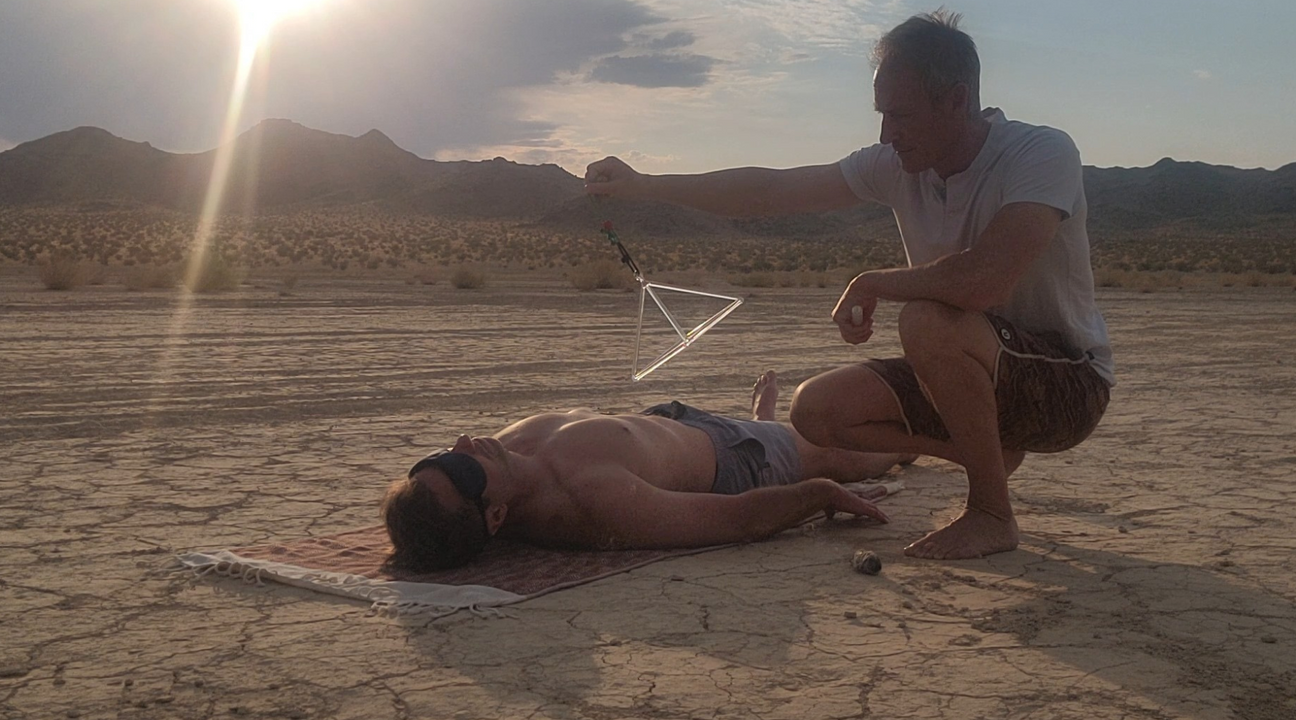
You cannot think your way out of a structural adaptation. If the diaphragm has lost range and the fascia has set around a defensive posture, that needs hands-on intervention — restoring joint communication, releasing fascial restriction, rebuilding breath mechanics.
This is the difference between a retreat that feels nice and one that changes something. Nice is a state. Structural change is a baseline.
Enough time to encode a new baseline
Realistically, the first day and a half is deceleration. You will likely feel restless, possibly irritable, and find yourself reaching for a phone that is not there. That is the withdrawal from a stimulation pattern, and it is expected.
Actual work begins after that. This is why I am skeptical of the weekend format for this particular problem — you are paying for the deceleration and leaving before the part that matters.
Why format matters more than amenities
Most executive burnout offerings fall into two categories. Clinical programs, which are appropriate when there is a diagnosable condition or a substance issue, and luxury wellness resorts, which are pleasant and largely address comfort rather than physiology.
There is a gap between them: high-functioning people who are not clinically ill but are structurally and autonomically depleted, and who do not want a group program, a shared circle, or a scheduled curriculum.
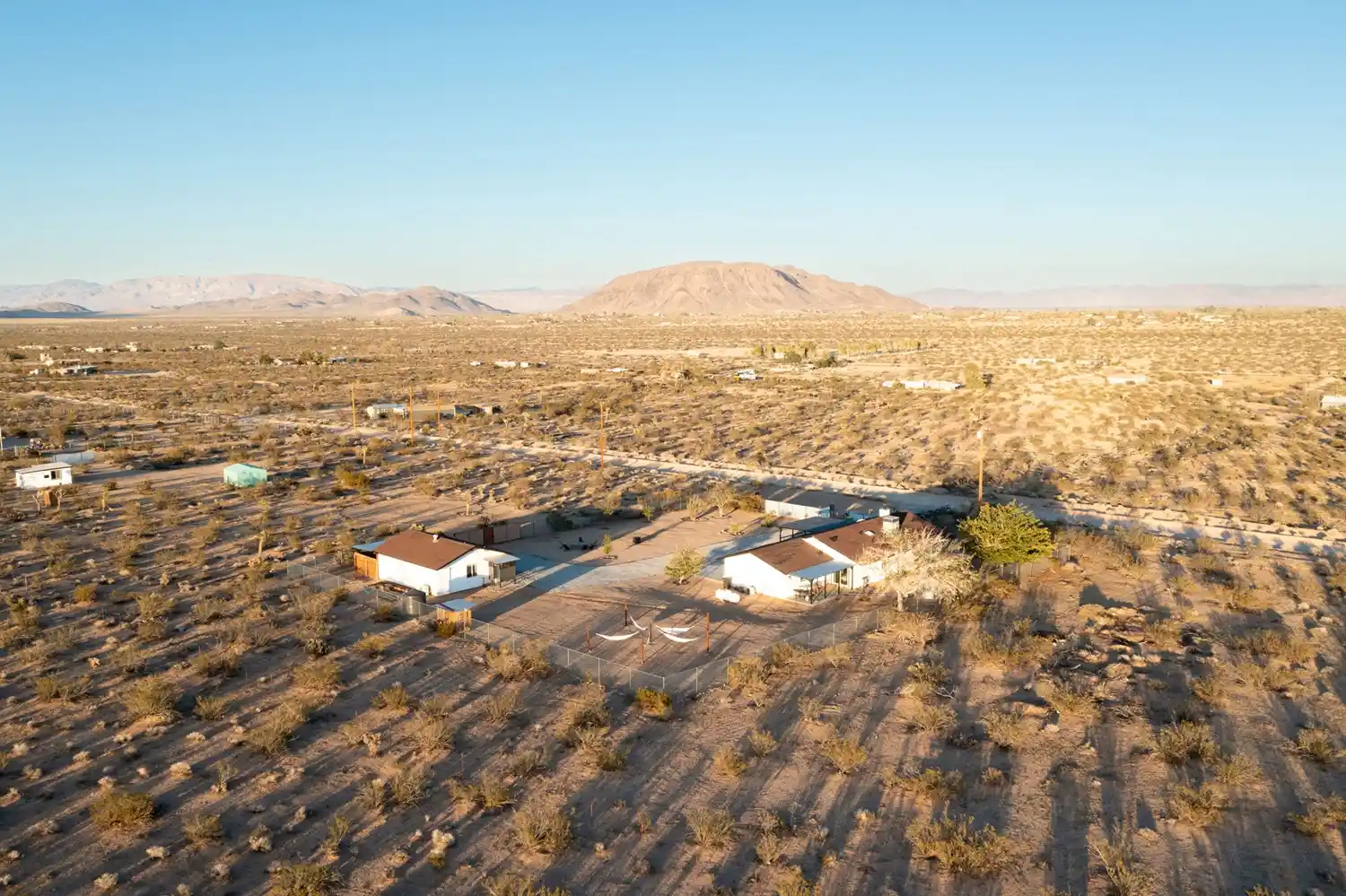
That gap is where I work. One to three people at a time, on five acres in the high desert. No cohort. No group sharing. No fixed program, because a depleted system does not need more structure — it needs less demand and precise, individual attention.
For executives, there is also a practical dimension: discretion. A private property with no other guests means no one from your industry in the next room and no explaining yourself to a group.
An honest assessment
A few things I would want you to know before considering this.
A retreat is a threshold, not a cure. It restores capacity and gives you a reference point for what regulated actually feels like — which most chronically depleted people have genuinely lost. What you do with that afterward determines whether it holds. If you return to identical conditions, your physiology will follow.
Some of it will be uncomfortable. When a long-held pattern begins to release, what comes up is not always pleasant. People commonly experience emotional release, temporary fatigue, or disturbed sleep during the process. This is normal, and knowing it in advance helps.
It will not fix your business. It may, however, restore the cognitive range you need to see it clearly — which is often the thing people actually came for without saying so.
I cannot promise an outcome. Anyone who does is not being straight with you. What I can say is that the mechanism is well understood, the approach is consistent, and after thirty years I have a fairly reliable sense of what a given system needs.
If you recognize yourself here
The most useful diagnostic question I know is this: when was the last time you felt genuinely calm, rather than tired or numb?
If you have to think about it, that is information. If the answer is measured in years, that is a different kind of information.
You can read the private immersion formats, see what past guests have said, or read how I work.
Ramsay Mead is a structural healer, movement educator, and longevity guide working privately with founders, executives, and athletes at Camp Vortex Retreats in Joshua Tree, California.
This article is educational and is not medical advice. Burnout can co-occur with clinical conditions requiring professional treatment. If you are experiencing persistent low mood, hopelessness, or thoughts of self-harm, please contact a licensed medical or mental health professional.